The theme of this book is world religion and spirituality.
The pop-ups in this book use a variety of hand gestures, movements, and
positions from around the world as a reflection of the human desire for
deeper spiritual connection. From these religious practices or
symbols the reader sees hands as universal symbols from a variety of
religions, such as Hinduism, Buddhism, Catholicism, Judaism, Islam, and
more.
"He's got the whole world in his Hands"
Negro spiritual
The hand
of God giving life to Adam.
Chenrezig Avalokiteshvara
- The embodiment of compassion
Two of his four hands are
joined in the prayer position holding the wish- fulfilling gem. In
his other left hand he holds a lotus flower and in his other right
hand, a crystal mala, which he is using to count the repetitions of
his mantra, Om Mani Padme Hum, Hail to the Jewel in the
Lotus, which liberates all beings from suffering.
Buddha touching the earth to call the
Earth Goddess.
Subduing Mara, Calling the Earth to
Witness. The left hand lies in
the lap, palm upward. The right hand bends over the right knee, with
fingers slightly touching the ground. During meditation, Siddhartha
is subjected to many temptations many posed by the evil
Mara, who bombards him with
his demons, monsters, violent storms, and his three seductive
daughters. The Buddha remains steadfast. Then to testify to
Mara of his meritorious
past, he points to the earth with his hand and calls the Earth
Goddess. Thorani, the Earth Goddess rises from the ground and wrings
the water from her long black hair, by this action raising a
torrential flood that drowns Mara
and
his army of demons. This gesture
symbolizes enlightenment, as well as steadfastness
(imperturbability). It is easily the most common Buddha gesture in
Thai wats.
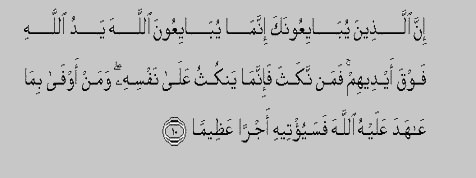
"Truly, those who pledge
their allegiance to you [O Muhammad] are pledging their allegiance
to God, (and) the Hand of God is over their hands."
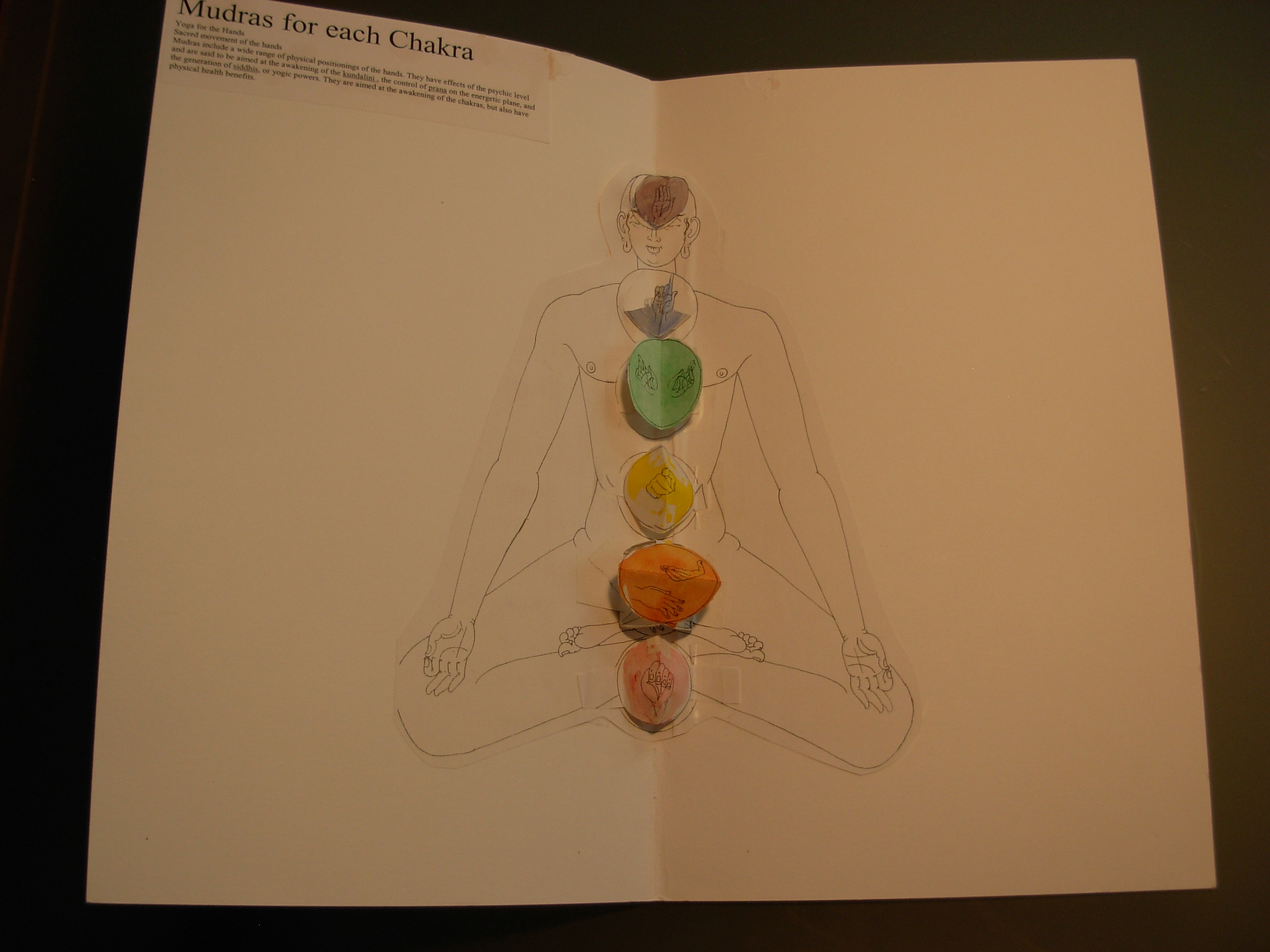
Mudra for each Chakra -
Yogic sacred movement for the Hands
Mudras include a wide
range of physical positionings of the hands. They have effects of
the psychic level and are said to be aimed at the awakening of the
kundalini, the control of prana on the energetic plane, and the
generation of siddis, or yogic powers. They are aimed at the
awakening of the chakras, but also have physical health
benefits.
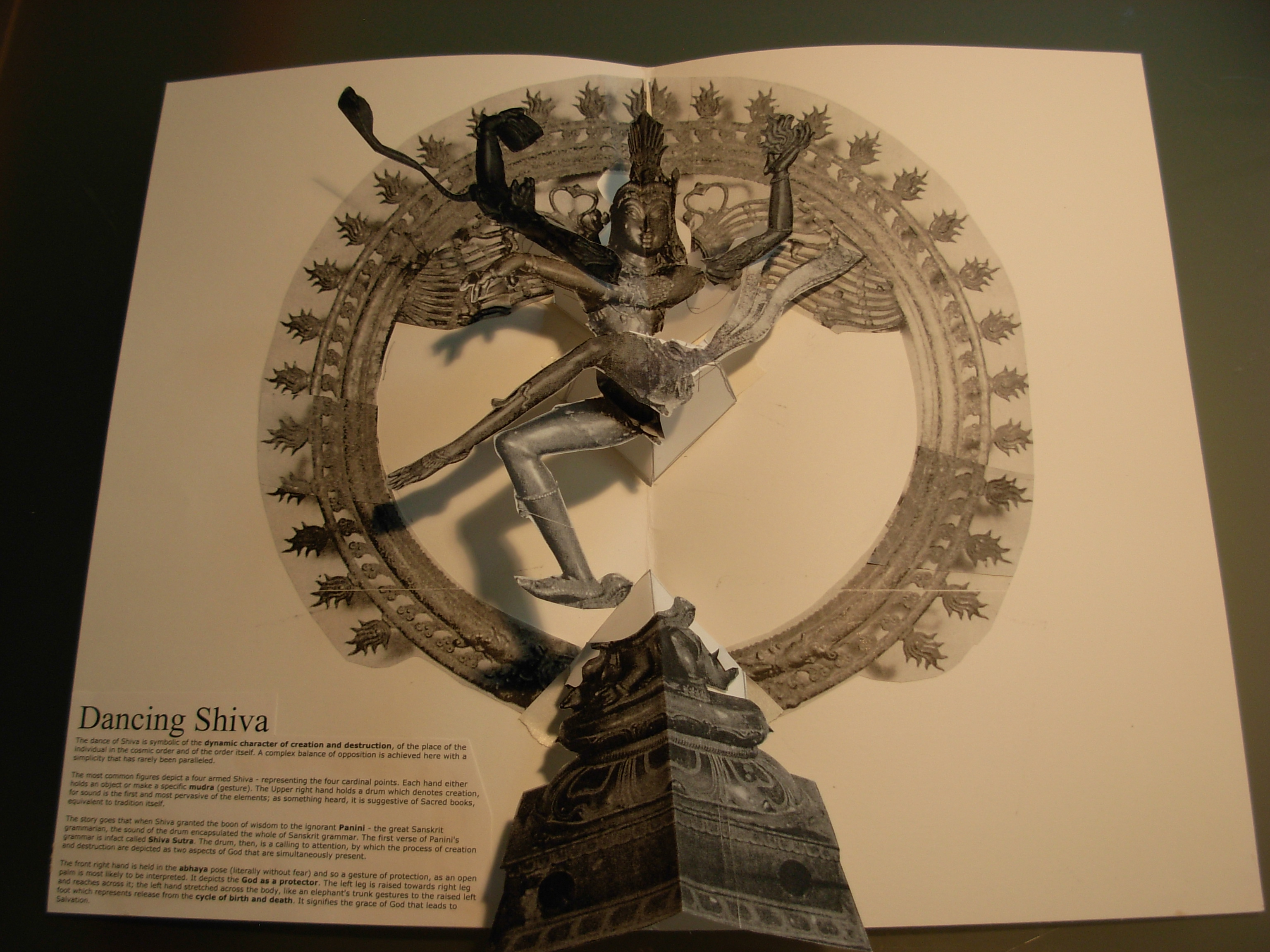
Nataraja - The Dancing
Shiva
The dance of Shiva is symbolic of the
dynamic character of creation and destruction, of the place of the
individual in the cosmic order and of the order itself. The most
common figures depict a four armed Shiva - representing the four
cardinal points. Each hand either holds an object or makes a
specific mudra (gesture). The upper right hand holds a drum which
denotes creation, for sound is the first and most pervasive of the
elements; as something heard, it is suggestive of sacred books,
equivalent to tradition itself. The drum, then, is a calling to
attention, by which the process of creation and destruction are
depicted as two aspects of God that are simultaneously present. The
front right hand is held in the abhaya pose (literally,
without fear) and so a gesture of protection, as an open palm is
most likely to be interpreted. It depicts the God as a protector.
The left leg is raised towards the right leg and reaches across it;
the left hand is stretched across the body, like an elephant's
trunk, and gestures to the raised left foot which represents
release from the cycle of birth and death. It signifies the grace of
God that leads to salvation.
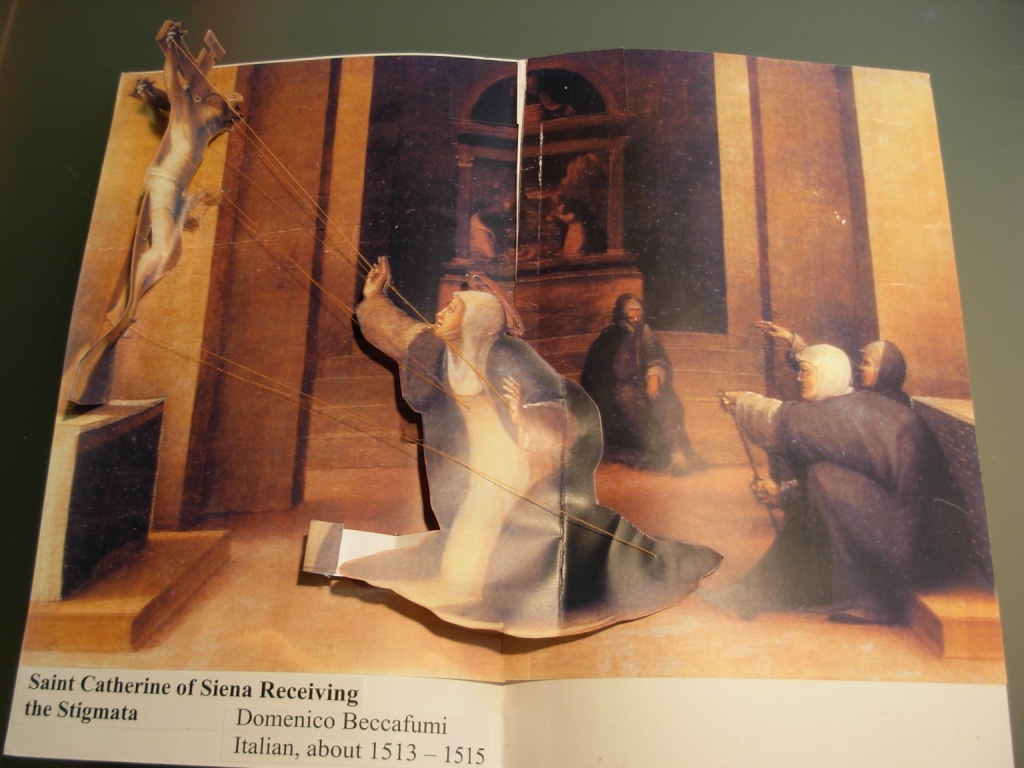
St Catherine of Siena receives the
Stigmata.
Stigmata
are bodily marks, sores, or sensations of pain in locations
corresponding to the crucifixion wounds of Jesus. The term originates from the
line at the end of Saint Paul's Letter to the Galatians where he says, "I bear on my
body the marks of Jesus." The Stigmata occur on the palms of the
hands, the feet, and a piercing at the side where Jesus was lanced
by a Roman soldier. Many reported stigmatics are members of Catholic
religious orders. The majority of reported stigmatics are female.
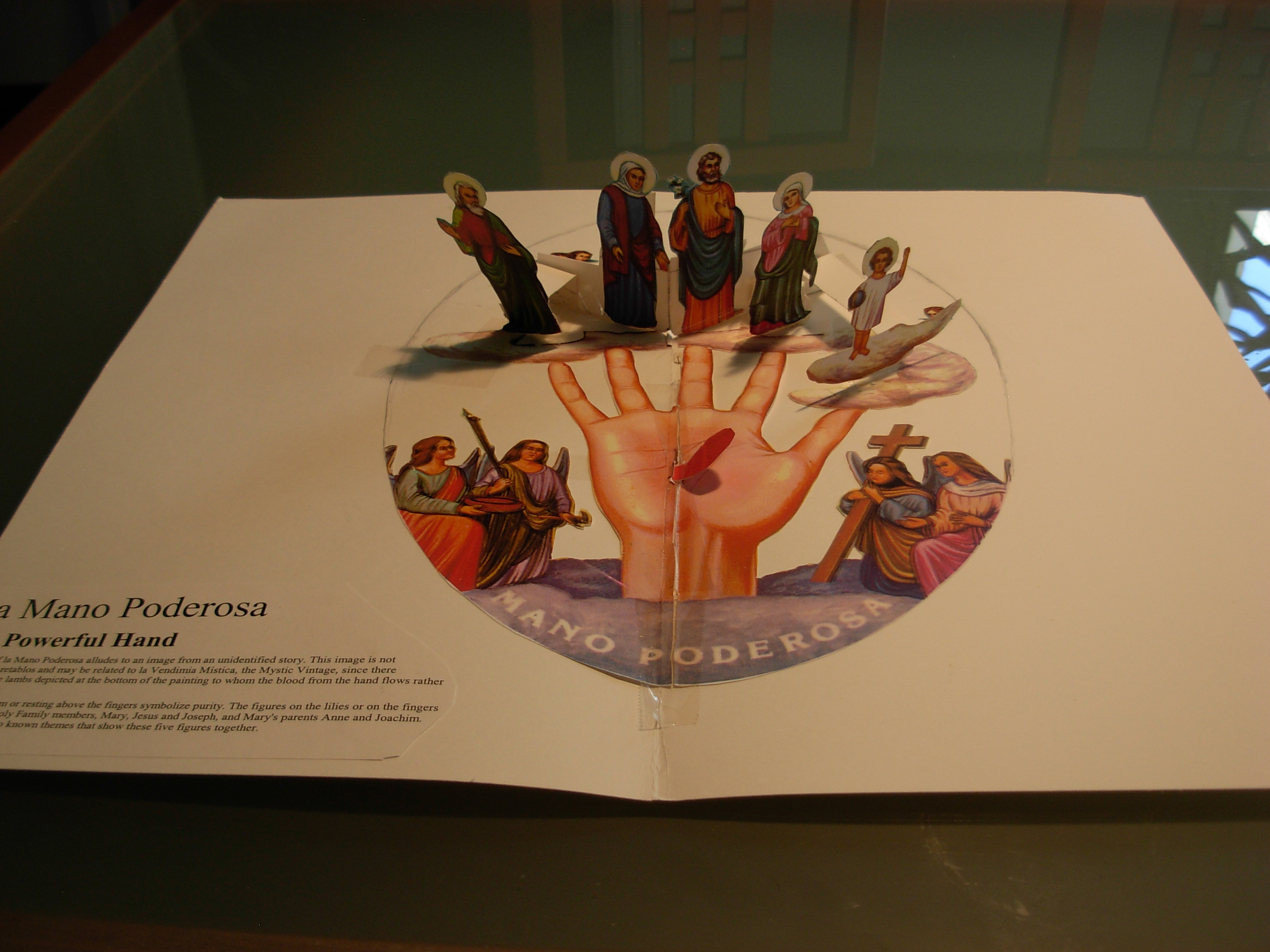
La Mano Poderosa
La Mano Poderosa
de Dios (the Powerful Hand of God), a very compelling image. At the
five fingertips of God sits the extended Holy Family, from left to
right, St. Anne, Mary, the Christ Child, Joseph and Joaquin. The
blood that spills from the stigmata turns into wine to feed the
flock and enters the chalice to represent the Holy Sacrament.